Applied Research Projects in Health & Health Technology advance healthcare through new instructional prototypes, innovative medical tools, and improved patient outcomes.
We work with partners in postsecondary institutions, healthcare, and industry to help improve quality of life for patients. Our research in education and training aims to strengthen healthcare system capacity and outcomes by applying emerging technologies and advancing preventative care.
Join us on a journey of innovation and exploration—working together to shape the future of healthcare.
Timeframe:
Mar 2020
to
April 2022
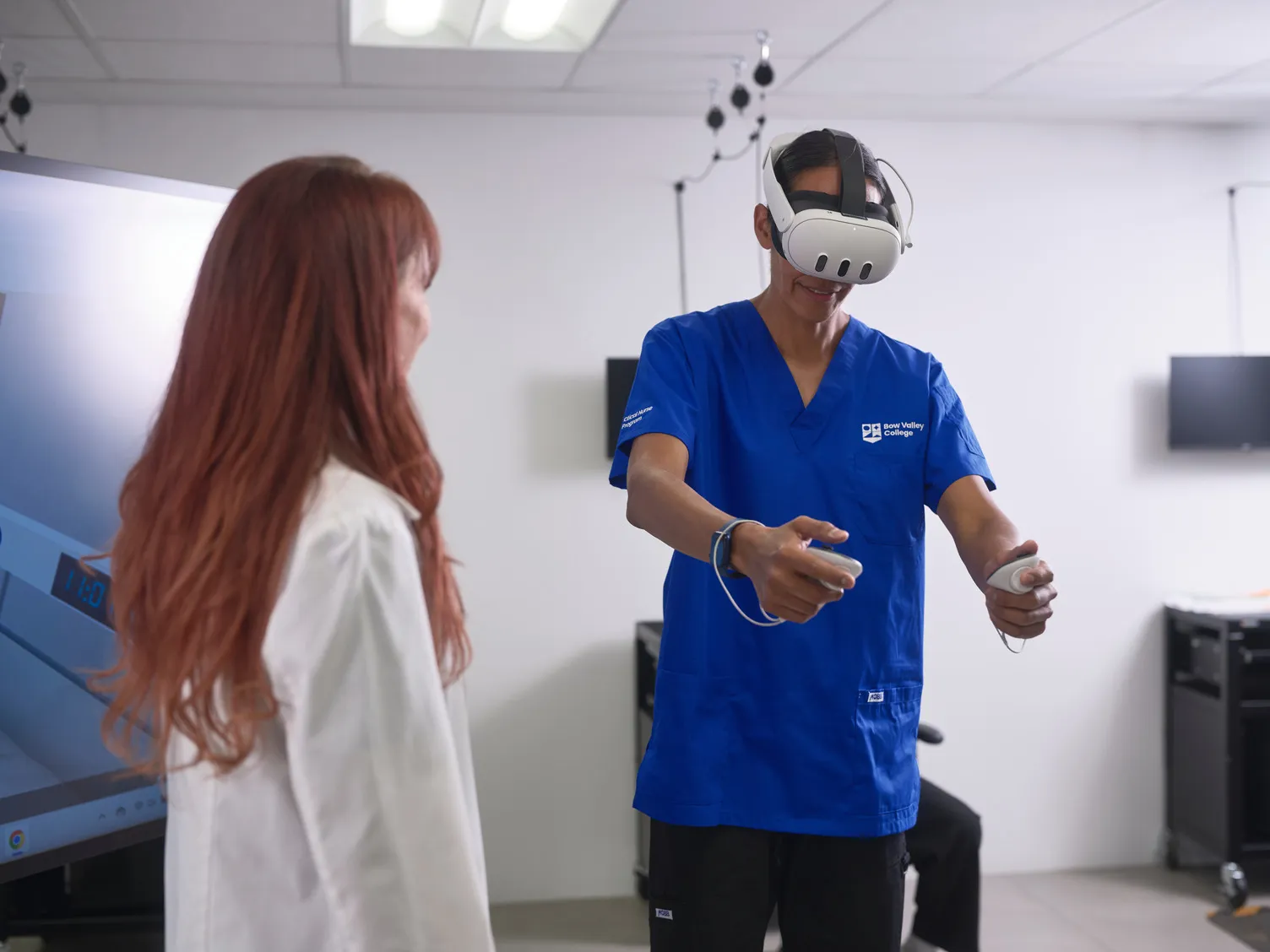
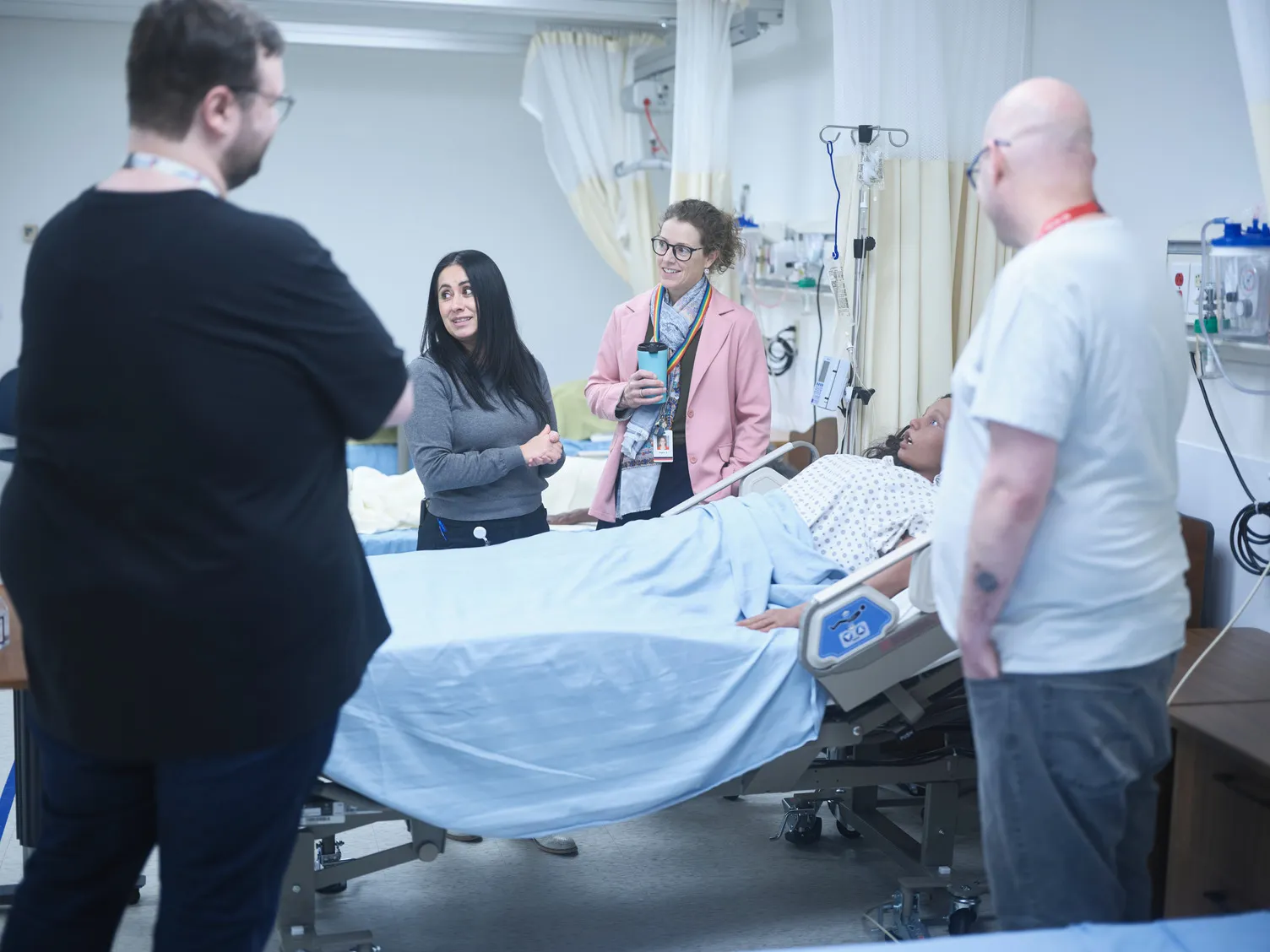
Nursing programs often experience issues related to skills testing in the laboratory setting. Assessments rely on a 1:1studentto faculty ratio and they are often subjective and susceptible to examiner biases. On top of the undue burden on faculty resources and time due to the 1:1 style of assessment, grading appeals and re-tests are common, taking up further resources and time. In addition, because assessments are often performed on fellow students who are usually healthy, students will be unlikely to encounter abnormal findings prior to their clinical placements. Partners ICOM Productions and Bow Valley College (BVC) created new VR health assessment experiences for learners in post-secondary institutions (PSIs) and health care through co-development of three scenarios for cardiovascular and two scenarios for eye, ear, nose, and throat (EENT) systems. Three 3D avatars are fully developed with enhanced facial fidelity. This work supports the strategic vision of BVC in shaping the future of college education and of ICOM productions which embodies learning made possible.
ICOM/BVC team completed product testing; VRFA was fully integrated into BVC’s nursing curriculum, and 50 post-secondary institutions (AB, BC, ON) were engaged with positive feedback received on the product. As for ICOM, the industry partner, this project helped hone their business process. Key learning includes working in close collaboration with a PSI partner throughout a project’s life cycle. ICOM’s Greg Sudbury mentioned that project execution enables them to shift from traditional cascade model to more contemporary agile model.
Timeframe:
Jan 2025
to
December 2025
Learner engagement is essential to effective practical nursing education. To address low engagement, this study investigates the impact of interactive, case-based teaching strategies on participation, skill development, and knowledge retention in the Adult Health Assessment course for LPN learners.
This project will help us identify teaching strategies which engage LPN learners in Adult Health Assessment courses and increase LPN learners’ engagement in Adult Health Assessment lab.

Timeframe:
Feb 2024
to
May 2024
This project studies the effect of using VR as a learning tool to support teaching communication skills and mitigating challenging clinical situations.
Kaleidoscope XR (KXR) has developed a VR training platform called Caregiver VR. This VR platform is unique compared to other VR platforms used for training in that it uses a multi-player environment format, and it provides an immersive sensory experience. The system simulates some of the sensations that a dementia patient may have, such as hearing sounds that others cannot hear, the sense of tremors, and visual hallucinations. The environment is open, not scripted, meaning that role-plays can take on an open-ended approach and will rely on the user's critical- thinking and problem-solving skills to engage with each other and work on the challenges that the role-play creates. The research assessed learners' skill development and learning outcomes compared to typical role-plays that may happen in the classroom to teach similar skills.

Timeframe:
Apr 2025
to
September 2025
Bow Valley College has an existing bridging program to help Internationally Educated Nurses (IENs) integrate into Alberta’s health care system. The program focuses on three key domains: foundational Canadian cultural competencies, College of Registered Nurses of Alberta (CRNA) entry-level competencies, and psychomotor clinical lab skills. These areas ensure IENs meet regulatory requirements and adapt effectively to the Canadian health care environment and providing vernalized nursing care. Research will test the effectiveness of immersive learning technologies and targeted micro-credentials in accelerating IEN integration into specialized roles, to help address critical health care workforce shortages.
This project aims to develop rapid, employer-driven training that addresses urgent workforce gaps in Alberta. The project includes recruiting students to participate in training, creating new courses, and delivering courses to students.
Timeframe:
Aug 2023
to
August 2027
This project aims to provide a continuum of support forInternationally Educated Nurses (IENs) in Alberta. Research will assess how an innovative learningplatform and emerging technologies like AI-supported mannikins and VR canstreamline and expedite credentialling for IENs.
Bow Valley College (BVC) is working in partnership with the Calgary Region Immigrant Employment Council (CRIEC) to fill the gaps between pre-arrival and entry into the bridging program. Together, we will develop an outreach strategy to improve awareness and increase program participation, in addition to providing credential recognition, engagement with employers and wrap-around services tailored to the needs of skilled newcomer women who face additional barriers to having their credentials recognized and integrating in the labor market.
Timeframe:
Jan 2023
to
June 2024
Health Care Aides (HCAs) are instrumental in delivering up to 80% of the direct care to older Canadian adults in long-term care or at home. They are the primary profession providing frontline care to our aging populations.
During the final clinical placement, students in the College’s HCA Certification program step into the role of an HCA under the guidance of an industry HCA (buddy). BVC instructors observed that there are variations in guidance that students received across facilities. This is specifically influenced by the culture of the placement organizations, staffing burdens, and individual attitudes. This variability, coupled with the absence of standardized training for industry HCAs, is recognized as a hindrance to achieving optimal learning outcomes.
The research project is now complete, and the results presented to CLPNA, the project funder. Recommendations are to develop a standardized training/education for equipping HCAs with the skills needed for guiding students during clinical placement. HCAs come from extraordinarily diverse experience and educational background and the program should fit the needs.
Timeframe:
Jan 2026
to
February 2027
The study will examine students' self-perceived confidence and workplace preparedness following simulation-based experience in comparison with BVC clinical liaisons and on-site clinical preceptors.
This project will help us evaluate the impact of simulation-based learning on students’ confidence and preparedness.
Timeframe:
Oct 2025
to
March 2026
Bow Valley College is preparing the next generation of LPNs to
1) deliver competent and compassionate care to individuals with MHA challenges, and
2) improve workplace safety and well-being in healthcare environments.
Given the complexity of mental health and addictions in continuing care settings, the college plans to use simulation-based learning to bridge competency gaps, especially before students enter real-world clinical placements (preceptorships).
The project aims at:
1) identifying the needs and gaps in training in collaboration with the health care partners; and
2) developing & implementing sim-based MHA training during students’ preceptorship (the final component of the PN program) and new nurses in an MHA setting. Phase 1 study has been launched and continued until Feb 2026.
This project will help us identify critical MHA competency gaps and the effectiveness of integrating sim-based MHA training to enhance MHA care.
Timeframe:
Jan 2025
to
February 2026
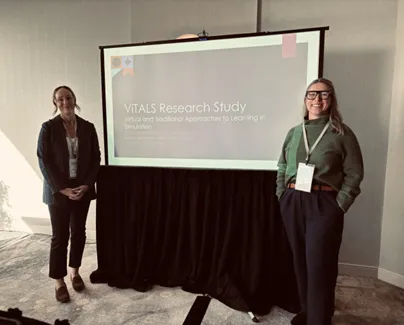
This research explores how immersive virtual reality (VR) compares to traditional high-fidelity (HF) simulation in training Practical Nurse (PN) students. The study involves students from Bow Valley College’s Clinical 2 course participating in both VR and HF simulation activities, each designed with the same learning goals. After experiencing the health simulation scenario, students will complete a survey using a validated survey tool. The study will analyze these responses to determine if there are significant differences in students’ perception related to which of the two simulation modalities (VR and HF) are more effective in addressing their learning needs. Traditional HF simulations can be expensive to set up, while VR offers a more cost-effective and flexible option. Additionally, VR has shown promise as a learning platform that can boost student motivation and engagement, offering a realistic, immersive environment that supports safe practice. By identifying which simulation modality most effectively prepares nursing students, educators can make informed decisions to develop higher-quality training. Well-trained nurses are essential for early detection of patient complications and safe care, especially in rural or underserved areas where access to expensive training tools may be limited. Finally, the study results can help ensure that future nurses are better prepared to promote the overall well-being and safety of the patients and enhance system capacity.
This project will help us understand strengths, limitations, and applications of sim modalities in clinical nursing training and open doors to adopt a more cost effective & accessible modality.
Timeframe:
May 2025
to
December 2026
Robotics are promising adjunct tools to be used in healthcare settings for engagement, companionship and daily assistance to help caregivers connect more deeply with seniors.
This project is a transdisciplinary study in which faculty from diverse schools (Business, Technology, and Community Studies) at Bow Valley College (BVC) together with the Applied Research (Health & Health Technology) team will collaborate with People Living with Dementia (PLWD) and staff at the Brenda Strafford Foundation (BSF) to develop a novel, age-inclusive product. Proving the feasibility of integrating robotics into a continuing care facility will enhance the quality of life of PLWD and help free up valuable staff time for more care-related tasks.

Timeframe:
August 2025
to
December 2025
This study by Bow Valley College (BVC) is to find ways residents’ dining experiences can be improved from the Health Care Aides (HCA) perspective.
The participation of HCAs in this research creates the opportunity for the BSF to recognize HCAs essentials to deliver competent person-centered care to residents at mealtimes.

Timeframe:
May 2025
to
July 2025
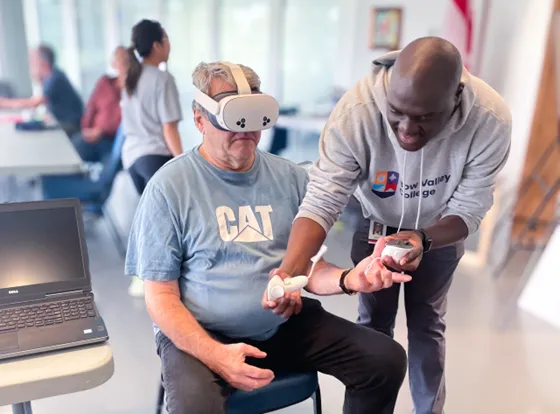
This project evaluates the feasibility or effectiveness of digital games that are specifically designed to enhance the health and wellbeing of older adults.
This project will help us understand if digital games are accepted among older adults, and to understand the effectiveness of an intervention using digital games on the activities of daily living (ADL), mental and cognitive health status of older adults with and without cognitive impairment and frailty.
Timeframe:
February 2025
to
December 2025
This study explores the dual responsibilities of student caregivers-post-secondary students who provide unpaid care to family members or others with chronic illnesses, disabilities, or significant care needs. While much of the literature originates from the U.S., very little is known about Canadian student caregivers, despite the emotional, academic, and financial pressures they face.
This project addresses a critical gap in Canadian research by documenting the unique struggles of student caregivers. Its contributions include:
By identifying challenges and offering solutions, this project seeks to build inclusive educational environments where student caregivers can thrive academically while balancing caregiving responsibilities
Timeframe:
October 2024
to
January 2025
This study explored the complex relationships between stress, general self-efficacy, and support systems among post-secondary students. A total of 344 students from Bow Valley College (BVC) participated, representing diverse age groups, genders, and both domestic and international backgrounds.
The results underscore the urgent need for tailored support strategies in post-secondary education. By understanding how stress interacts with self-efficacy and social support, institutions can design more effective interventions. These may include
By strengthening both individual coping skills (self-efficacy) and external resources (social support), institutions can foster resilience, reduce stress, and ultimately enhance academic performance and student well-being.






%20sim.webp)