%201%20(2).jpg)

An applied research project, "Educational Preparation and Simulation in Practical Nursing Students' Workplace Readiness: A Comparative Study of Students, Preceptors and Clinical Liaisons", examines how prepared do students feel when they enter the workforce, and how that compares to what clinical preceptors see.
What does it really mean to be ready for the workplace?
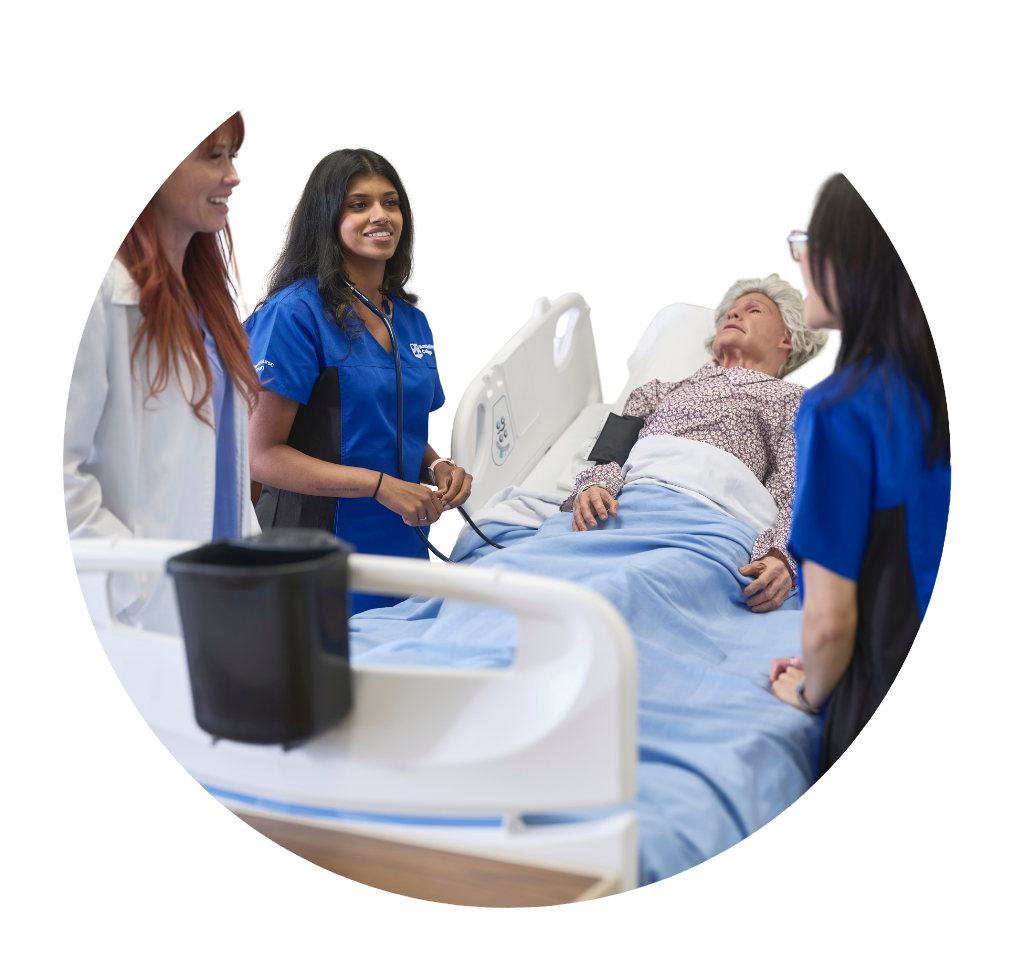
For Practical Nursing students, the answer can look different depending on who you ask. Students experience the transition firsthand, preceptors supervise and mentor them in clinical settings, and clinical liaisons support both students and placement sites throughout the practicum experience. Together, these perspectives offer different views of what it means to be ready for practice.
That difference in perspective is at the heart of one of the Practical Nursing program’s most ambitious research projects to date.
The idea began with a conversation in fall 2025, when Associate Dean of the School of Health and Wellness, Jacinda Daley, recognized an important question worth exploring. She brought the right people into the conversation and helped give the early discussions direction.
Melissa Bruce, Associate Dean in the School of Health & Wellness, and Nicole Dumais, a clinical and lab instructor in the Practical Nursing program, were part of those early discussions, contributing both leadership and frontline teaching perspectives. Melissa credits Jacinda with helping turn the initial idea into something bigger. “She was a very big driver of this project,” she adds.
From there, Melissa and Nicole took the lead, bringing together students, faculty, clinical partners and the college’s Applied Research team to examine workplace readiness from multiple perspectives.
The project, Educational Preparation and Simulation in Practical Nursing Students' Workplace Readiness: A Comparative Study of Students, Preceptors and Clinical Liaisons, centers on a question that brings those perspectives together: how prepared do students feel when they enter the workforce, and how does that compare to what preceptors and clinical liaisons observe?
For Nicole Dumais, the research is rooted in a challenge she has observed throughout nursing education: the gap between what students are expected to know and what is realistically possible at the beginning of their careers.
While doing research for her master's degree, she saw how different groups often view workplace readiness through very different lenses. “Expectations can be incredibly high,” she said. “Workplaces often assume students are coming out of basic education with advanced skills, and that’s just not possible. Students, meanwhile, can’t know what they don’t know when they’re just starting out. There’s a big disconnect.”
Melissa Bruce also sees the study as a chance to strengthen relationships with clinical partners while supporting curriculum renewal. “Having these diverse perspectives allows the college to truly understand what our external partners expect, and how we can bridge that gap,” she added. “It comes at a perfect time, because we’re in the middle of major curriculum changes.”
To capture a full picture, the team is surveying students, preceptors, and clinical liaisons using the same validated tool. Students completed surveys immediately after Clinical 3, while liaisons and preceptors participate after spending sufficient time with students to assess their readiness.
The team has sent out surveys to more than 200 students, more than 20 liaisons, and over 50 clinical sites. The scale is large by design: the more voices, the clearer the story.
Nicole is especially interested in the qualitative responses from liaisons and preceptors. “It'll be interesting to see where the feedback differs and where it aligns,” she said. “If both groups identify similar strengths or gaps, that tells us a lot.”
.png)
The study has been a collaborative effort since the start. Melissa and Nicole both credit our Applied Research team for their contributions to the project.
Research Associate Jessamine Keith Pagada contributed heavily to the literature review, while Melissa and Nicole built the survey structure and delivery approach. The college’s research team; Kakali Majumdar, Amos Kafata and Zahra Shire are providing the data expertise needed to analyze results later this fall.
“We couldn’t do it without [the] team.” Melissa emphasized how essential the support is. “The data analysis is a huge part of this, and we rely on their expertise.”
The project is also supported through NSERC Mobilize funding, which is helping the team carry this applied research forward and strengthen connections between the college and its clinical partners.
The impact could extend well beyond a single study. By comparing the perspectives of students, preceptors and clinical liaisons, the research team hopes to generate evidence that strengthens nursing education, supports healthcare organizations, and helps ensure graduates are prepared for the workforce.
A particular area of interest is the role simulation-based learning plays in that transition. Through labs and simulation experiences, students build clinical judgment, communication, teamwork and critical thinking skills before caring for patients.
The study will help explore how those experiences translate into practice and how they are perceived by those working alongside graduates in clinical settings.
"This research is about more than measuring readiness. It's about understanding how education and simulation prepare students for the realities of practice," Melissa adds. “We see this as an opportunity to build stronger partnerships between academia and practice, while helping graduates enter the workforce feeling confident, capable and ready to contribute.”
Survey collection continues through August, with analysis set for the fall and early findings expected in November.
The knowledge gained through the study will contribute to stronger connections between education and practice, supporting a more confident nursing workforce and better care for patients and communities alike.