Long before he built virtual humans, Dr. Christian Jacob was a computer scientist with a not-so-secret interest: biology.
“I’ve always been fascinated by biology and the human body and the brain,” says Dr. Jacob, a University of Calgary computer science professor and director of the LINDSAY Virtual Human project.
That curiosity found a purpose roughly 15 years ago, when Dr. Bruce Wright, then leading undergraduate medical education at the University of Calgary, asked Dr. Jacob a simple question: could the medical curriculum be mounted on a digital human?
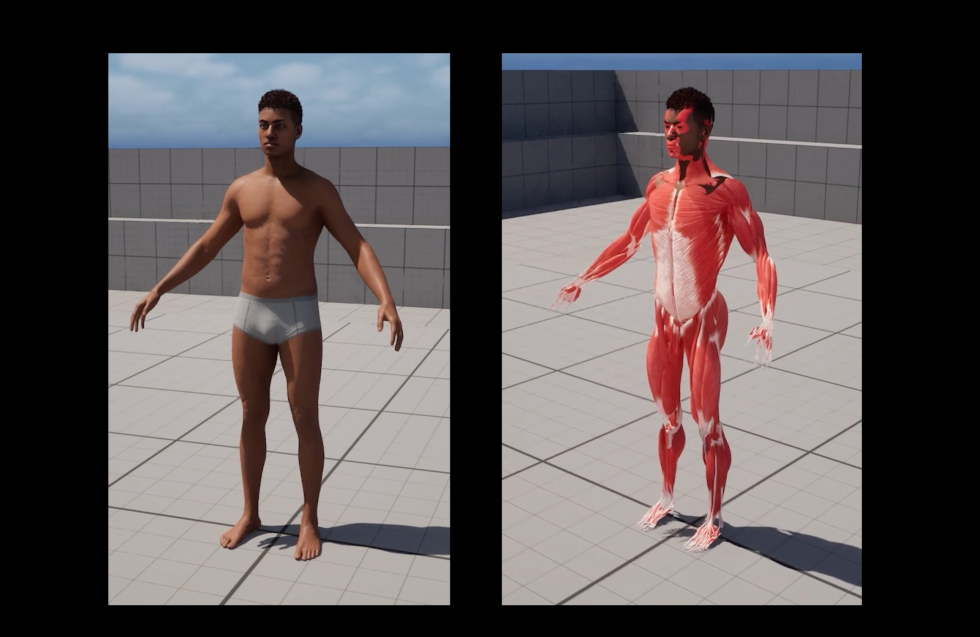
The answer became LINDSAY, an interactive 3D virtual human that helps students explore anatomy and physiology in ways a textbook never could. The project carries the name of Dr. Lindsay Kimmett, a young medical student who died in a car accident as the work began. A grant from the Kimmett family supported its development.
When the original grants ended, Dr. Jacob brought LINDSAY into his own lab, where it branched into immune system and brain simulations, including the Giant Walkthrough Brain, a live, musical tour created with renowned science communicator Jay Ingram.
The turning point was technological. Epic Games began releasing professional-grade tools for free, and Dr. Jacob’s team settled on Unreal Engine, the engine behind Fortnite. Over the next decade, he says, it advanced “almost like in lockstep with what we wanted to do.”
Bow Valley College entered the picture a little over a year ago. Through a University of Calgary Transdisciplinary Connector grant, Dr. Jacob set out to build a games-and-simulation community across Calgary, with the college as part of the idea from the start. At a cross-institutional workshop where LINDSAY was an exhibit, Dan Pigat, who taught an Unreal Engine course at the college, saw an opportunity.
Pigat wanted real-world projects for his students, and LINDSAY fit. Together they combined Epic Games’ MetaHuman tool, which generates realistic digital humans, with anatomically accurate models from Berlin-based SciePro. By the end of the course, students had LINDSAY’s first working muscle movement.
The collaboration grew from there. Hamish Harrison, Manager of Applied Research at Bow Valley College, came on board, and remaining grant funding was shared with the college. Over the summer and fall, Bow Valley College student teams built a fully rigged arm and digestive system. The arm work was sparked by Dr. Eli Kinney-Lang from biomedical engineering, who wanted students to see which muscles create movement and which nerves trigger them. Using the college’s motion capture studio in its Digital Production Hub, a performer’s live movements can now drive the anatomy beneath a MetaHuman’s skin in real time.
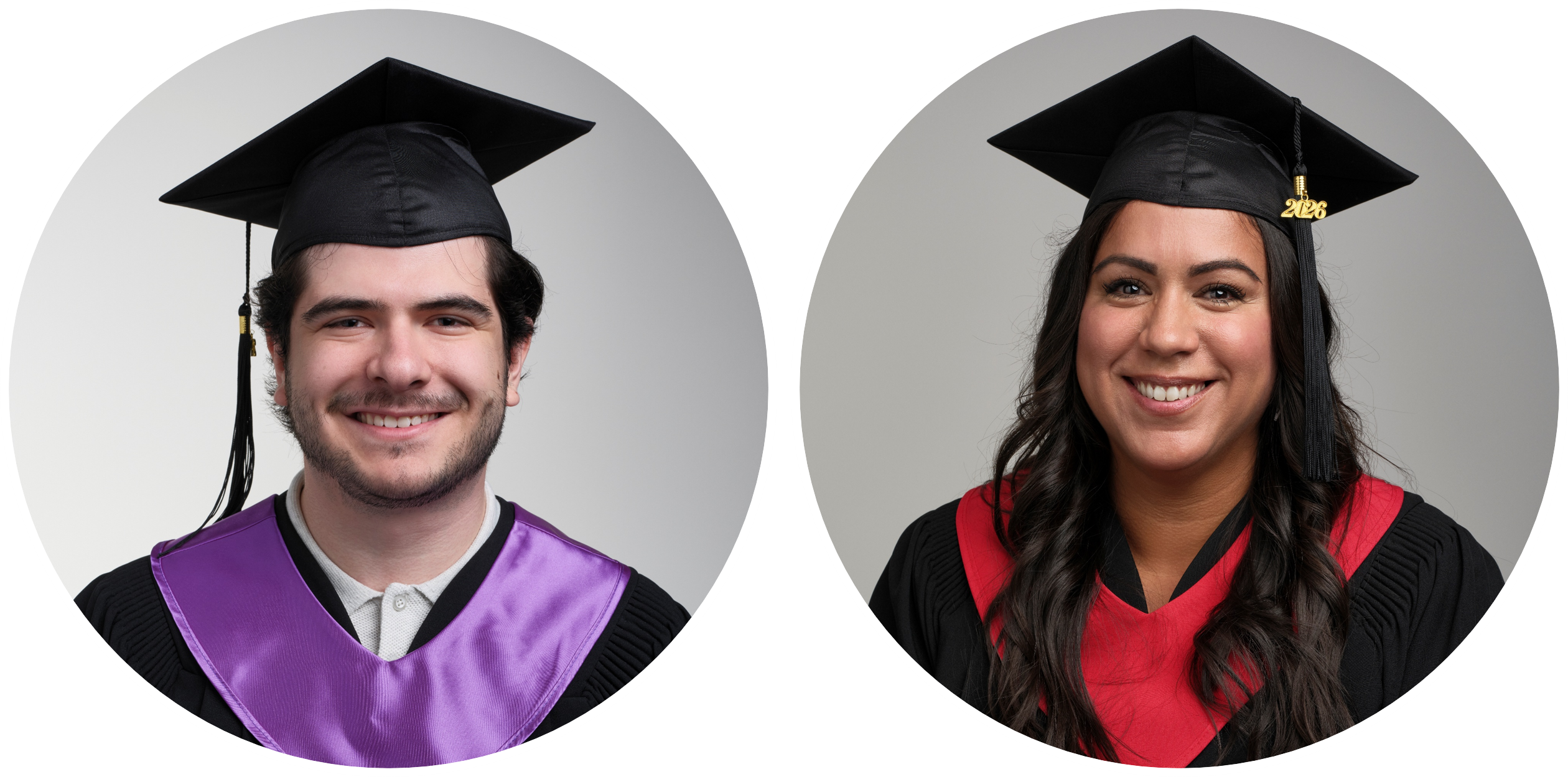
Bow Valley College students Andrew Charles, Liza Samedov, and Jordi Venegas worked alongside 3D modelers and animators to bring the project to life. Using skills from the college’s 3D modelling and animation program, they rigged parts of the human body for movement. Beyond the arm and digestive system, the muscles now move, and the lungs contract and expand.
The research team has also grown. “One of the main objectives at the research department at Bow Valley College is training and simulation through digital tools,” says Harrison. “This has further expanded our knowledge of how we can use motion in a 3-dimensional space for educational purposes. During this process we learned to work with new tools all thanks to the students at Bow Valley College. In tech, this is a crucial skill to have as it continues to evolve rapidly.”
For Dr. Jacob, the college filled a gap. “It really added expertise that we actually don’t have at the University of Calgary,” he says. “We don’t have a games program or an entertainment arts program. But you do, and you have the facilities, which are just fantastic.”
MetaHumans also open a door anatomy education has long kept closed. Students once learned from a default male and female body. Now, LINDSAY can take many forms, including infants, teenagers, older adults, and people of different ethnicities. As anatomy instructors have stressed to Dr. Jacob, “students have to understand that this is not a machine they are talking about, it’s actually a human.”
At its heart, LINDSAY is about making anatomy more accessible and engaging. Instead of memorizing a chart, students can tap a nerve and watch a finger bend, or see which muscles work together to make a fist. Dr. Jacob sees it as a complement to cadaver labs, not a replacement.
Now on sabbatical, Dr. Jacob plans to spend the next six to eight months building prototypes himself. He sees three paths ahead: getting LINDSAY onto mobile phones, laptops, and classroom screens; embracing new tools like the Apple Vision Pro; and using simulations to help answer open questions in biology.
His personal passion brings the story full circle: “multi-scale” models that let learners travel from the whole body into the heart, into a muscle, into a single cell, and back out again.
“It’s really this Magic School Bus idea of flying through the human body and going deeper and deeper and then coming back up,” he says. The challenge is making that journey understandable without making anyone motion sick.
For Dr. Jacob, success is simple. “To me, success would really be to have it available to as many people as possible,” he says. Part of getting there is showing what’s possible: early medical collaborators often didn’t know what to ask for until they saw a prototype.
That’s where he sees the next generation, including Bow Valley College’s Entertainment Arts students, making the biggest difference. Raised on games and at ease with new technology, they bring exactly the creative instincts LINDSAY needs.
Fifteen years after a single question in a professor’s office, LINDSAY is finally catching up to the vision that started it. And with Bow Valley College students helping steer, the bus is just getting started.