A Bow Valley College Disability Studies Diploma student is exploring how better training could help frontline workers support people who use augmentative and alternative communication devices.
During the first practicum of her program, Grace Gachoka met someone who used a speech-generating device to communicate. Staff at the facility understood that the device was essential because the person could not speak, but few knew how it actually worked.
“We all went to school. Why can’t we be trained to at least have this basic knowledge?” Grace remembers thinking.
That experience inspired her Alberta Innovates Summer Research Studentship project at Bow Valley College. The Summer Research Studentships program provides students with paid learning opportunities at post-secondary institutions across Alberta.
Grace’s research explores whether Disability Studies students and frontline workers receive enough preparation to support people who use alternative forms of communication, including speech-generating devices, sign language, picture cards and digital tools.
Bow Valley College offered the Summer Research Studentship program for the first time this summer, with funding secured to continue it next year.
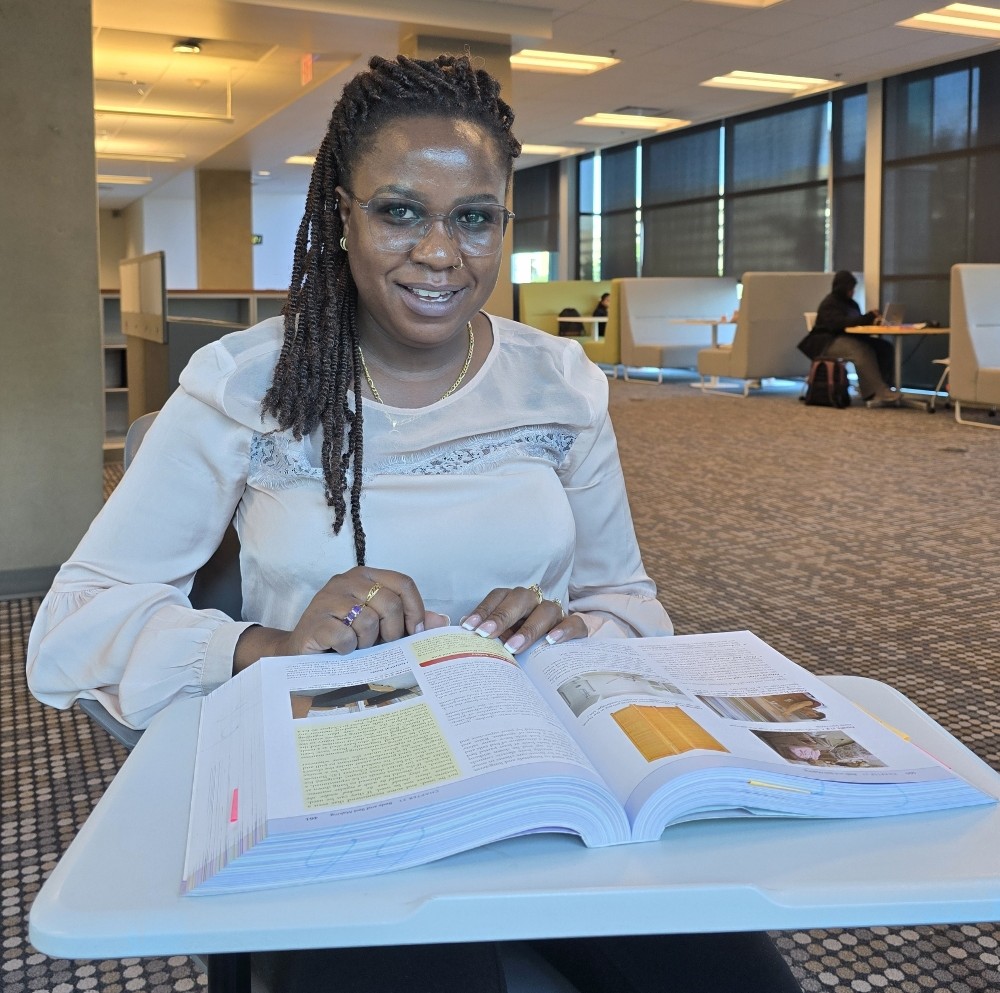
Grace came to Bow Valley College from Kenya and completed the Health Care Aide Certificate in 2025 before entering the Disability Studies Diploma. When the Applied Research Office invited students to propose research ideas, she saw an opportunity to investigate the gap she had observed.
“I saw itas a one-time chance…to find a solution for someone who may need it in thecommunity,” Grace recalled.
Dr. Zahra Shire, the manager in Applied research and Grace’s supervisor on the project, said the proposal stood out because it grew from frontline experience and focused on a practical solution.
From May through August, Grace completed an ethics review, examined existing literature, recruited participants, and analyzed anonymized data. Zahra noted that securing ethics approval can challenge even experienced researchers. She also saw Grace’s abilities grow over the course of the project.
“She is incredibly passionate about this topic and has shown remarkable growth in her critical thinking, problem-solving, and research skills.”
The project draws on the perspectives of Disability Studies students and frontline workers. Grace partnered with the Universal Rehabilitation Service Agency(URSA) to connect with workers who had experience supporting people with communication disabilities.
She explained the study to participants and gathered their insights. The research team then analyzed the responses to identify common themes and possible training needs.
“It’s not my opinion alone,” Grace said. “All of us now have a voice through the research to say, ‘There’s this problem, and we need to make a change in the community.’”
Grace hopes the findings will encourage foundational communication training for students and frontline workers, not to make them experts in every device, but to give them enough knowledge to recognize different communication methods, respond appropriately and seek specialized guidance when needed.
Zahra described the project as a workforce preparedness issue that could strengthen caregivers’ confidence while supporting autonomy, dignity and quality of life.
“They are our eyes in the community,” Zahra said of students, whose classroom and placement experiences can reveal gaps and help shape practical research. “We are a community college at the heart of it. We know what the community needs and we develop innovative solutions for them.”
Support from Alberta Innovates turns those observations into paid, student-led projects that could help inform training and organizational practice.
Grace credits Zahra Shire, Amos Kafata, Zahra Aghababaei, faculty in the Disability Studies Diploma, research participants, and community partners with guiding her. Their support transformed research from something distant into a practical way to turn lived experience into evidence.
As sheenters the final year of her diploma, Grace hopes to continue her education andpursue more research opportunities. Her advice to other students is simple: “Don’t beafraid. If you have an idea, come forward. Just give them the idea and theywill show you what to do.”

We gratefully acknowledge Alberta Innovates for its support of this research.





%201%20(2).jpg)